
What’s underneath the fairings of an electric motorbike? We had a look under the bodywork of an Ultraviolette F77 electric bike.
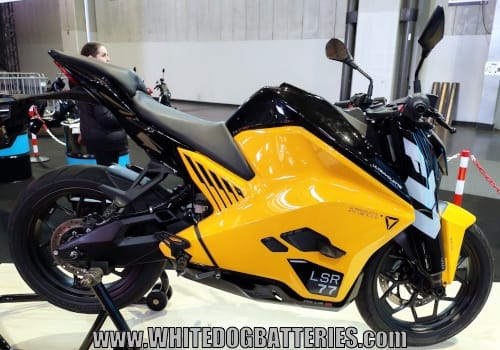
Note – The bike in this post was at the Motorcycle Live show at the NEC (Birmingham) in November 2025.
Ultraviolette Automotive, established in 2016, is an Indian manufacturer of high performance electric motorcycles.
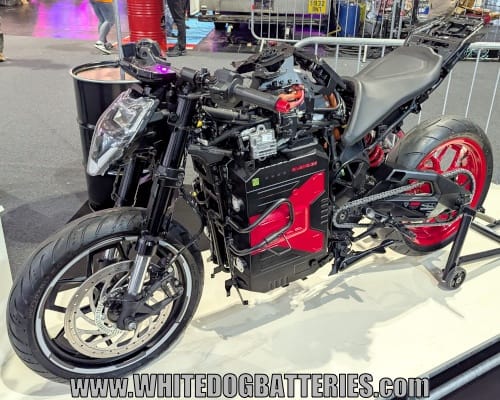
Ultraviolette F77 with the fairings removed
The F77 is a 30kw, 100nm torque, 155kph top speed (96mph) electric bike available in both ‘street’ and ‘sport’ styles manufactured by Ultraviolette and sold in the Indian and European markets.
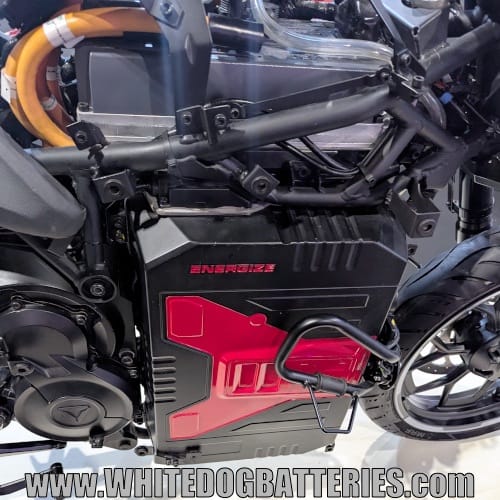
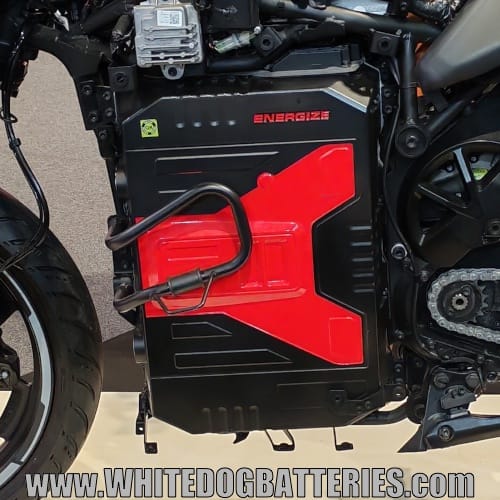
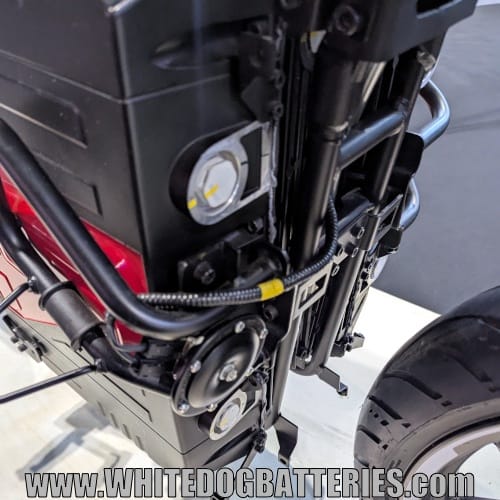
The F77 battery pack
The battery pack has a 10.3kwh (kilo watt per hour) capacity.
Note – A 10kwh battery often has enough power to run the appliances in a medium sized home for 12 to 24 hours, just to give an idea of the power.
General battery info:
- Capacity: 7.1 kwh (standard model) and 10.3 kwh (Recon premium model).
- Battery type: Lithium-ion (Li-ion).
- Range (supposedly certified!): 211km / 131 miles (standard model) and 323km / 200 miles (Recon premium model).
- Battery housing: Fixed (non-removable).
- Water/dust (IP) rating: Rated to IP67.
Note – IP ratings (short for ‘Ingress Protection’) are an approval standard for electrical enclosures (inc lights, batteries, switches, connectors etc) that states how much protection an item has against water and dust getting into it.
IP ratings can be used for most applications including household, industrial and vehicle items and is a much more accurate way of stating the level of protection as opposed to terms like ‘water resistant’ or ‘splash proof’.
Battery safety features:
- Fixed Battery: The battery is used as part of the bike’s chassis (aka a fixed battery, similar to how many motorcycle frames use the engine as a ‘stressed member’). This is common used in high-performance electric bikes to increase the bikes structural rigidity, better manage heat dissipation to give more space for the battery (so a bigger battery can be used).
- Cell Level Fuse Technology: The battery pack is equipped with cell-level fuses which are designed to isolate individual battery cells when they fail (as opposed to 1 fuse for the whole battery) which helps prevent thermal runaway or other cascading safety issues.
- Thermal Management: Optimal heat dissipation from all battery cells is crucial for safety and ensuring a longer battery life.
- IP67 Rated Enclosure: The all-aluminum casing is tested and rated to IP67 which means the casing should be able to prevent water and dust getting into the battery.
IP rating breakdown…
- IP: Stands for ‘Ingress Protection’
- Number 6: The 1st number is for dust protection and a 6 means the battery casing is ‘dust tight’ and should prevent dust getting into the battery
- Number 7: The second number is for protection against liquids (e.g. water) getting in and a 7 means the casing is protected against ‘temporary immersion’ in water
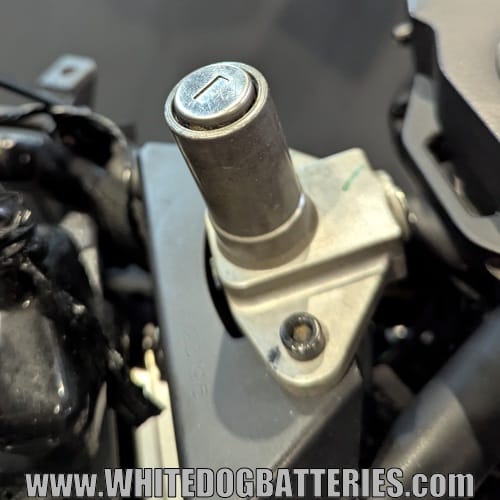
F77 key operated ignition switch, which, looks surprisingly standard!
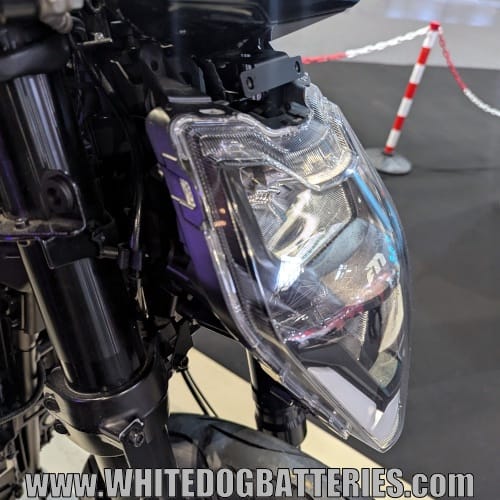
F77 headlight
Some of the basic running components look fairly standard on electric bikes showing that, apart from the electric motor, they aren’t as far removed from conventional engined bikes as you’d think.
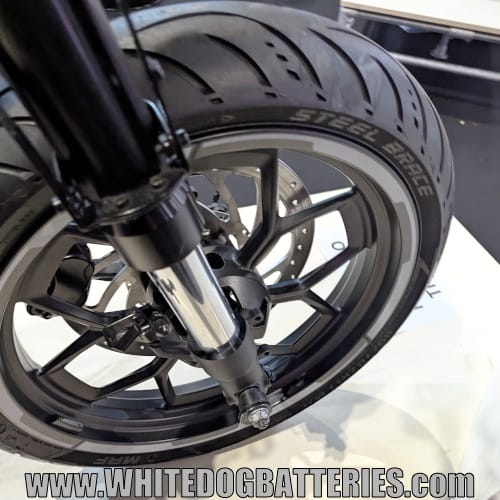

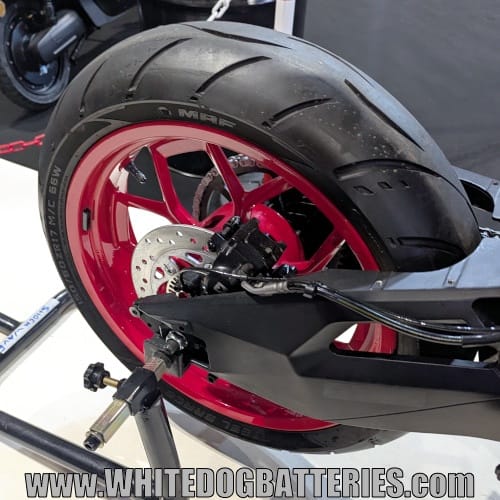
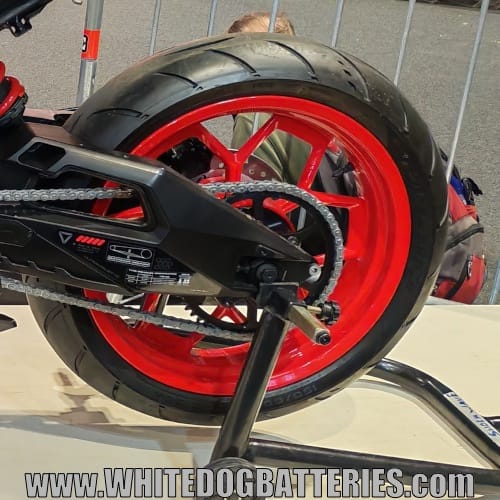
Front and rear wheels showing a fairly conventional set up (drive chain, hydraulic disc brakes etc).
The suspension, hydraulic brakes and drive chain look fairly standard and not much different from what you would typically find on a more conventional motorcycle.
Note – Something we found odd was the bike only has a single brake disc on the front. There is an ‘aero disc’ upgrade in the ‘racing’ upgrade pack for the rear wheel (Did wonder if this helped brake cooling but it just looks like a cover for the wheel, not really anything to do with the brakes?).
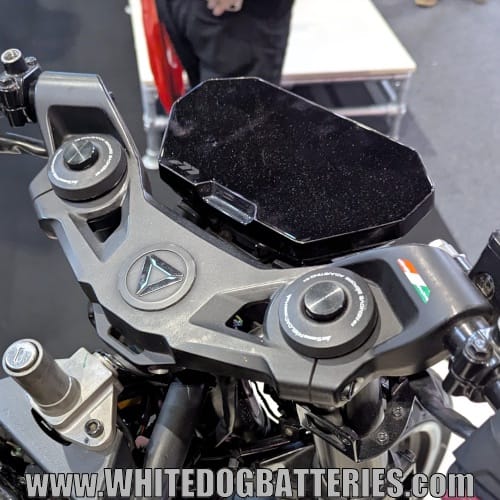
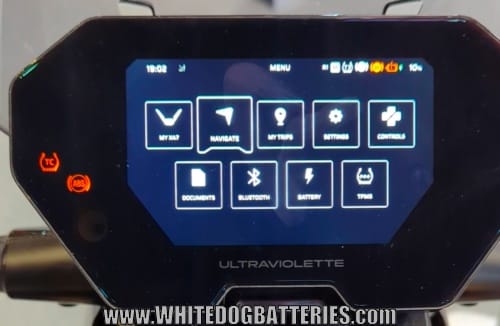
F77 LCD clocks.
The clocks on the F77 electric bike are digital/LCD (called the multifunctional 5-inch TFT display) and navigation through the menu is controlled from the left handlebar/switchgear control.
On the dash the tyre pressures, battery charge level, trip info, bluetooth connection, navigation, warnings and other settings can be accessed.
Although the dash is good, digital/LCD clocks are fairly standard on alot of bikes now so there’s nothing really different on them.
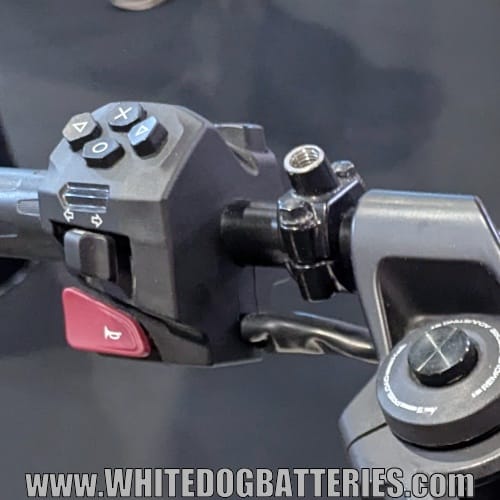
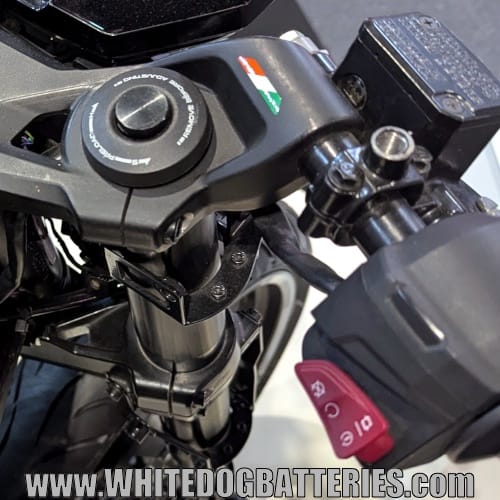
The left and right switchgear controls. The left one has push button controls for menu navigation on the dash.
Main drive components of an electric motorcycle:
- Battery Pack: Which stores the electric the bike uses.
- Electric Motor: The motor on the F77 is a ‘Permanent Magnet AC’ (PMAC) motor that converts the battery’s stored electrical energy into kinetic (movement) energy to move the bike.
- Motor Controller (aka Vehicle Control Unit – VCU): Similar to a CDI on a conventional petrol engine, the VCU regulates the flow of power from the battery to the motor based on how much the throttle slide is twisted (depending on the bike, the VCU also manages performance, efficiency, and safety systems like regenerative braking).
- Charger: Used to recharge the battery pack. Although not actually part of the drive train on the bike, it’s important as without the charger it won’t go far!
Note – In reality most electric bikes are alot more complicated then the list above suggests, but the above parts are needed to make an electric bike go.
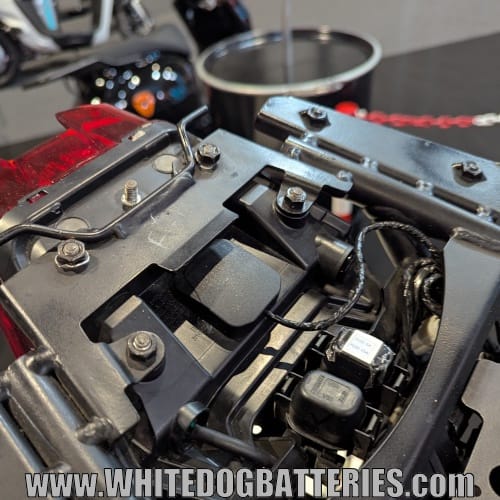

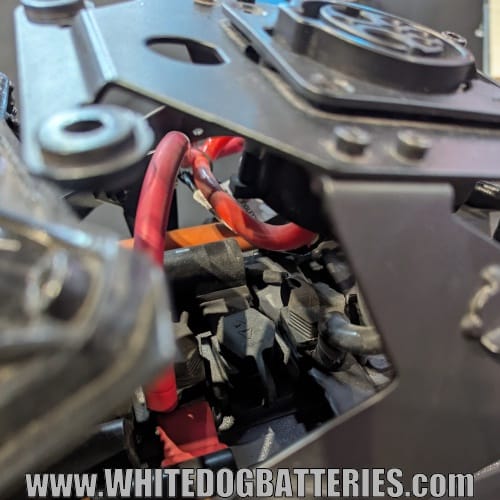
Top views of the F77 showing the rear light, charging socket and other parts.
Disclaimers:
The information provided on this page is ‘to the best of our knowledge’ and should not be taken as 100% accurate!!
To keep this page as a free resource for people to use, there are affiliate links (mainly Amazon) throughout the article. These affiliate links help maintain the cost of running this blog (basically, if you visit Amazon through one of the links and buy something, we make a few pence!).
Leave a Reply